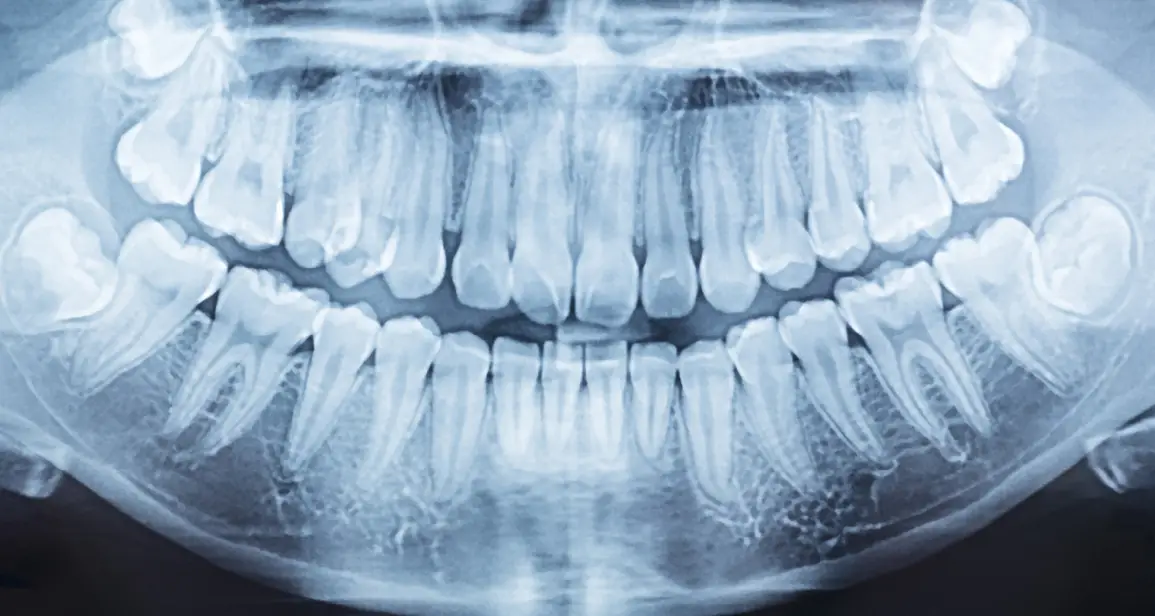


What are canker sores?
Are you experiencing an unpleasant pain and burning sensation in your mouth, which often leads to problems with swallowing and speaking? Most likely, you are suffering from canker sores.
Canker sores are among the most common inflammations of the oral mucosa. This is a clinical manifestation that we frequently encounter in our clinic. Some patients experience them regularly and therefore already know what the problem is and how to address it.
In newly developed cases, these are often non-specific problems and symptoms that frequently alarm patients and lead them to a dental clinic. They occur at any age, affecting both children and adults.

What does a canker sore look like?
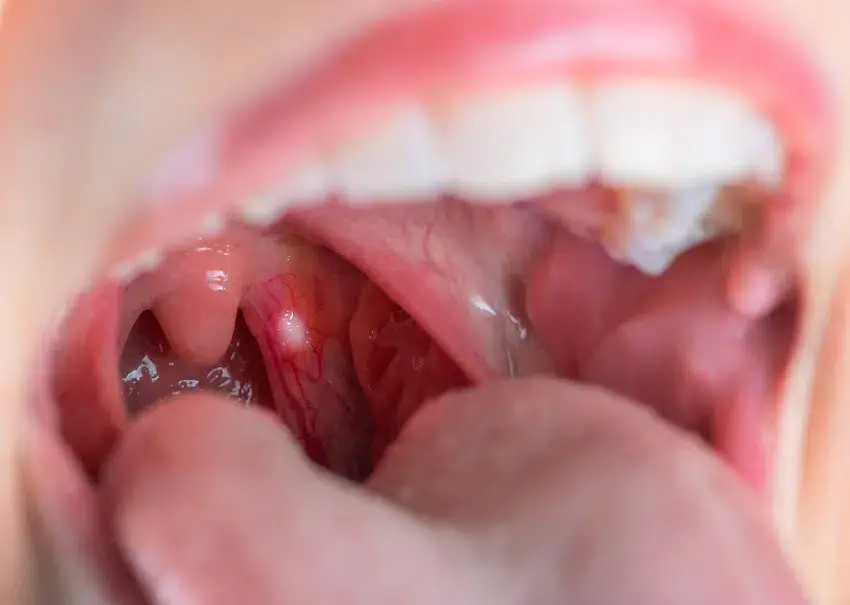
Canker sores appear as white or yellowish blisters that are red around the edges and can vary in size.
They usually occur on the inside of the lips, at the back of the mouth on the soft palate, under the tongue or on its edges, or on the inside of the cheeks. After the blister ruptures, a painful wound forms, which typically takes longer to heal.
the newsletter
By submitting this form, you consent to the processing of your email address and/or phone number for the purpose of sending commercial and non-commercial messages.
How do canker sores develop?
They can appear spontaneously or develop at various intervals (regularly or irregularly). Repeated occurrences are referred to as recurrent. The exact cause of their formation is unknown.
Their presumed onset is often associated with infection, immune system disorders, allergies, stress. They may also occur more frequently in women before menstruation due to hormonal fluctuations, in smokers, and in individuals with a deficiency of vitamin B, folic acid, or iron.
Canker sores can also develop as a result of mechanical damage to the oral mucosa, such as when brushing teeth and injuring the gums or mucosa with a toothbrush. Their development and progression go through several stages.
The first phase of development is a macule, which quickly transforms into a nodule. The superficial mucosa dies, and an ulcer – a canker sore – forms. Its base is covered by a white to whitish-grey coating. It has a round, oval, or sometimes slit-like shape. The surrounding area is red and painful.
People who frequently experience canker sores often feel the spot where they will form in advance. In this area, they feel tension, itching, and even burning. This condition lasts 1-3 days. Subsequently, redness appears, and an ulcer of varying depth forms, which is very painful.

What is the prevention of canker sores?
They are not infectious, and therefore cannot be transmitted from one person to another.
Prevention involves proper and thorough oral hygiene using the correct toothbrush and appropriate brushing technique, regular professional dental hygiene, as well as preventive vitamin intake, or causal treatment of the underlying systemic disease, of which canker sores may be one manifestation.
How to treat canker sores?
They can resolve spontaneously within 7-10 days without treatment. However, they are accompanied by unpleasant pain, which can be alleviated with rinses or medication.
Rinses with disinfectant properties include chlorhexidine-based mouthwashes. For local application, we directly use gels that typically have an analgesic effect, such as GUM Aftaclear, URGO Filmogel Afty, or Aloclair.
These are over-the-counter products available in pharmacies. However, it is always advisable to consult with your treating dentist to rule out other oral mucosal diseases. If you prefer a natural treatment approach, it is recommended to use sage, agrimony, echinacea, chamomile, or calendula for rinses, as they have anti-inflammatory effects.
If you're not sure what to do, schedule a free consultation— we're accepting new patients.
Summary
The clinical forms of aphthous ulcers include minor aphthous ulcers, major aphthous ulcers, and herpetiform aphthae. Minor aphthous ulcers are among the most common types, measuring up to 1 cm in size; they most frequently occur on the mucosal folds of the oral vestibule, the mucosa of the alveolar ridge, and the edge of the tongue.
The ulcer is covered with a pale yellow coating, is significantly painful to the touch, lymph nodes are enlarged, and the ulcer heals without a scar. Aphthosis major is a less common form of recurrent canker sores, typically larger than 1cm; healing is prolonged, the ulcer heals with a scar, and it is an autoimmune disease.
Very soft toothbrushes, rinsing with chlorhexidine mouthwash, and the use of corticosteroids, immunosuppressants, and plasmapheresis are recommended. Aphtae herpetiformes resembles herpetic gingivitis with a duration of 10–14 days; the most commonly affected areas are the buccal mucosa, soft palate, and tongue. Clusters of erosions with a diameter of 1–2 mm, which may coalesce, have indistinct borders, are irregular in shape, lack an inflammatory rim, and are painful.
They do not affect children and adolescents; they primarily affect women. Topical antiseptics, anti-inflammatory medications, and rinses with tetracycline or chlorhexidine solutions are recommended.

Dentist
I completed my dental medicine studies in 2020 at the Faculty of Medicine, Comenius University in Bratislava. During my studies, I completed several internships at modern clinics in Slovakia and participated in… Read more