Dental Implants: A Comprehensive Guide for 2025

Contents
Introduction to the Topic
Dental implants will provide you with a higher quality of life. Teeth that look and function like your own have a very beneficial and positive impact on your self-confidence and overall health.
Improve your ability to eat, speak, and laugh.
Dental implants from Straumann and NeoBiotech, offered by our clinic, will provide you with the benefits associated with stable and healthy teeth. Thanks to them, you will be able to bite into an apple or laugh carefree again. Regaining confidence when communicating with people – whether at work or during casual conversations with friends or family – is another advantage that implants offer.

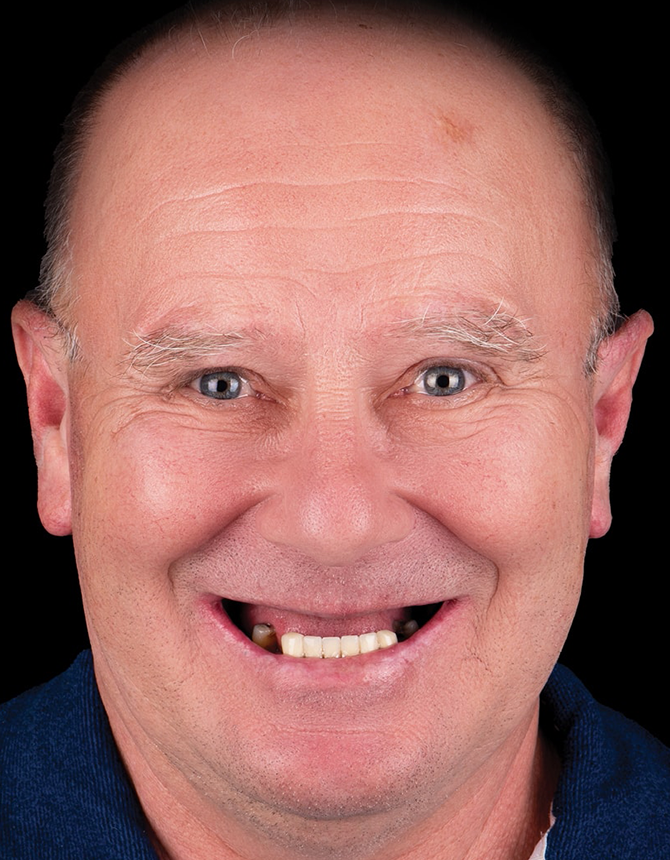
With extensive tooth loss, the function of chewing muscles is significantly reduced, the volume of muscle fibers decreases, and entire muscle groups shrink. In cases of edentulism, soft tissues lose support, the corners of the mouth droop, the nose and chin become relatively more prominent, and wrinkles and skin folds deepen.
Therefore, the all-ceramic dental crowns on implants created by our team are designed to match your natural facial features and restore your smile.
Why do the jaw and mandible need teeth to maintain their shape?
Dental implants will restore your radiant smile and also influence the distribution of chewing pressure that occurs when the teeth of the upper and lower jaws come into contact. This is very important for healthy bone stimulation and for preserving the shape of your face.
The roots of teeth in a healthy oral cavity transfer the force of chewing pressure to the jawbone and mandible. This helps preserve the bone. Under such conditions, the teeth, jawbone, and mandible remain stable.
However, if one or more teeth are lost, chewing pressure is not transmitted to the bone, resulting in bone loss. Over time, this leads to adjacent teeth shifting into the gap, opposing teeth over-erupting, or an overall change in facial appearance.
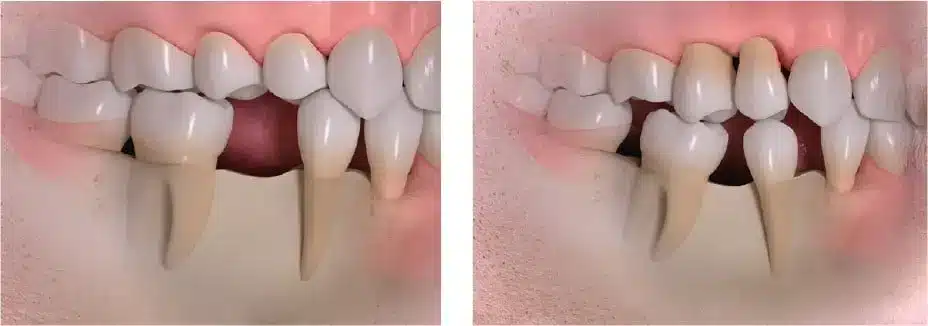
Traditional methods of tooth replacement, such as bridges and partial removable dentures, cannot stop bone loss in the area of the missing tooth.
Implant therapy can prevent bone loss because the implant transmits the force of chewing pressure to the jawbone and mandible in the same natural way as the original tooth root.
Are dental implants suitable for me?
Whether the loss occurred due to an accident, illness, or tooth decay, dental implants are a suitable replacement option for almost everyone.
Dental implants can be used if you:
- are missing one tooth – instead of a fixed dental bridge
- are missing several teeth – instead of bridges or partial removable dentures
- are missing all teeth – instead of removable dentures
The path to a new smile: simpler than you think.
How do I know if I am a suitable candidate?
If you believe dental implants are the right choice for you, simply contact us to schedule an examination and consultation.
It is not possible to undergo implantation if you have an inflammatory disease of the teeth, gums, or bones, as this would significantly affect the success of the surgical procedure, integration, and stability of the implant itself. Therefore, a comprehensive examination of your teeth and gums is necessary.
What is the approximate chance of successful placement?
Despite decades of clinical and scientific research, dental implants do not have a 100% success rate. However, the success rate has dramatically increased since their inception, and we can confirm successful placement of over 90% of all implants without reservation.
Long-term results also remain above 90% and are continually improving. If a dental implant does not integrate, it can be easily removed. After removal of such an implant, a regeneration process follows, and subsequently, a new implant is placed, or other options are discussed.
What is a dental implant?
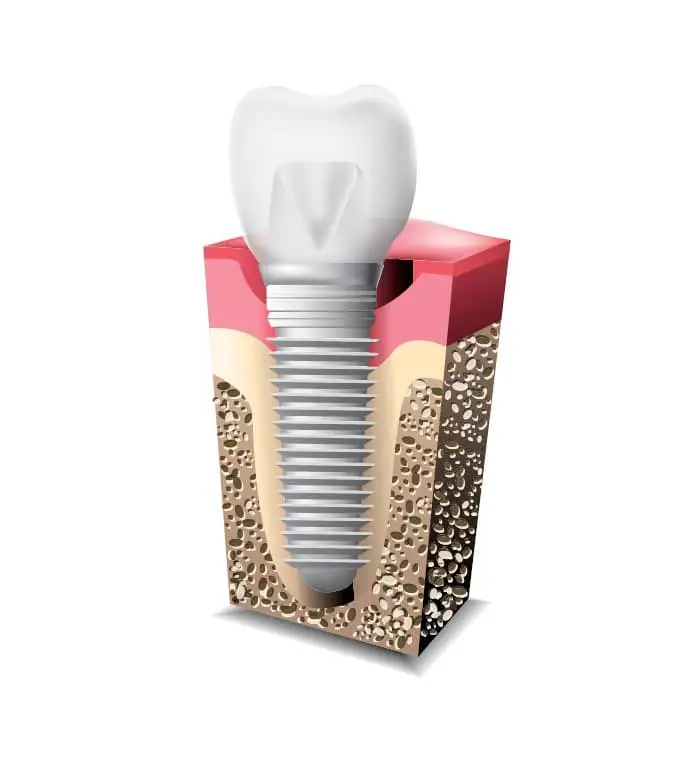
A dental implant serves as a replacement for a missing tooth. It consists of three parts: the implant (the implanted part inserted directly into the bone), a titanium abutment (the part that connects the fixture to the crown), and an all-ceramic crown.
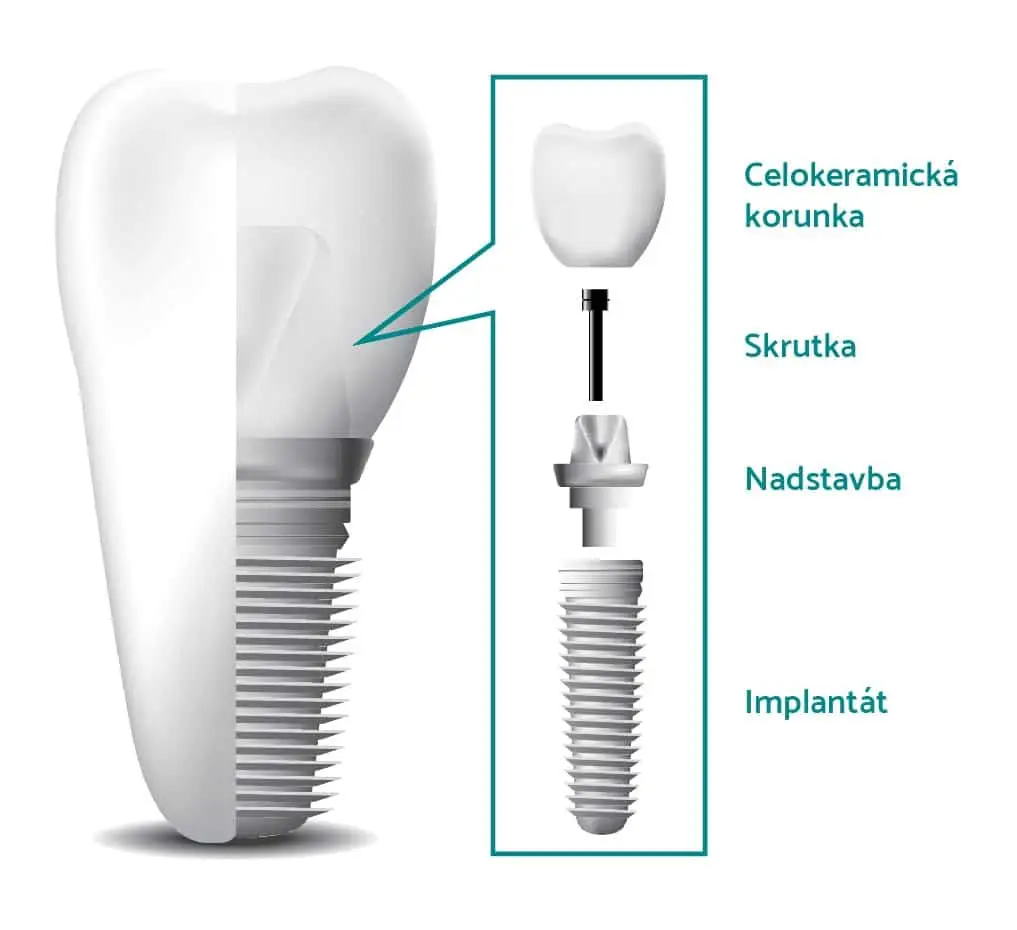
Today, implants are predominantly made of titanium – a metal that is biocompatible and provides the necessary strength and durability, as well as the ability of osseointegration, or "fusion" with the bone.
Dental implants function thanks to a process called osseointegration. This process occurs when bone cells bond directly to the titanium surface of the implant.
An osseointegrated implant can be used to replace one, several, or all teeth in the upper and/or lower jaw.
What types of implants do we use?
Straumann Implant
This Swiss implant features a state-of-the-art surface with high healing potential and improved bone regeneration, even in high-risk patients. The implant survival rate with immediate loading after 10 years is 98.2%. It is a world leader in implantology with 40 years of clinical research and experience.
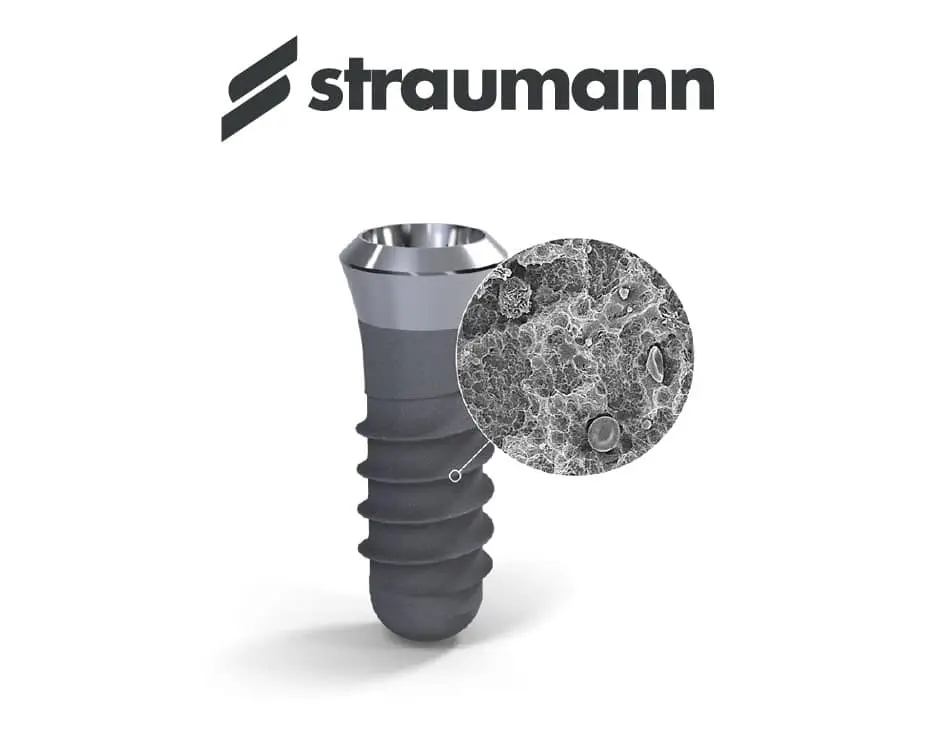
More than Swiss precision. A feeling of satisfaction.
Neo Biotech Implant
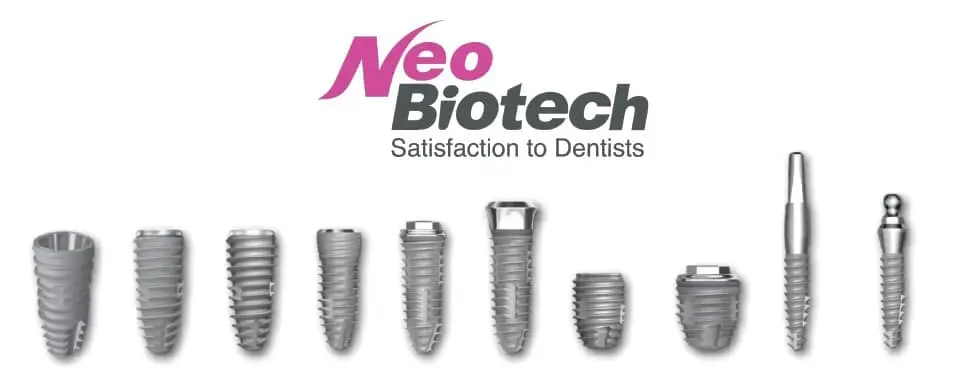
It is characterized by an affordable price while maintaining a high level of quality. It utilizes the clinically proven SLA surface treatment concept in implantology, combining simplicity and versatility.
Price of Dental Implants
Diagnostics:
- Non-binding consultation: free of charge
- CT scan: 95 €
Necessary accessories:
- Healing abutment: 60 €
Implant type (choose one):
- Straumann SLA Active: 850 €
- Straumann SLA: 750 €
- Straumann BLX: 950 €
- Neo Biotech: 550 €
Crown fabrication:
- Scan (CAD/CAM): 55 €
- All-ceramic crown: 480 €
- Titanium abutment: 220 €
the newsletter
By submitting this form, you consent to the processing of your email address and/or phone number for the purpose of sending commercial and non-commercial messages.
What is the procedure for implant placement?
Our clinic provides individual consultation, thorough diagnosis, and comprehensive dental treatment, which are crucial prerequisites for successful tooth replacement using implants.
Phase 0: Examination and Diagnosis
The first step at our clinic is to take a 3D X-ray, which gives the dentist an overview of your dental condition and the best treatment options available to you. You will discuss the advantages and disadvantages of each solution to ensure you are fully informed about every step of the treatment.
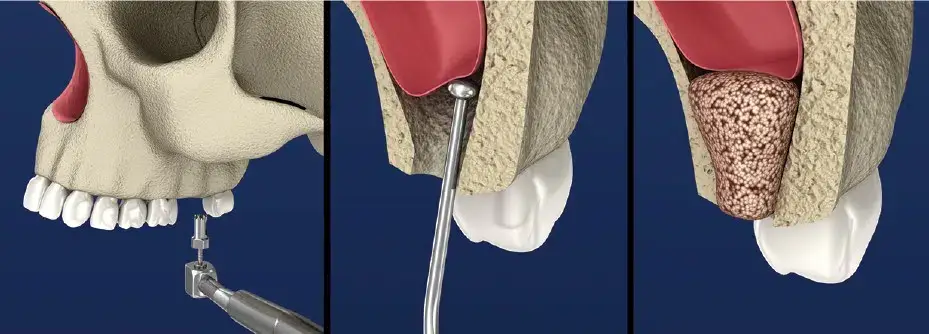
Implants need to be anchored in the jawbone like natural teeth. If there isn't enough bone available, implants can be placed concurrently with bone augmentation (bone grafting), which is a proven method for creating new bone.
Bone Grafting - Augmentation
Bone loss occurs as the body's reaction to a missing tooth. The only possible alternative to increase bone volume is to add it – through augmentation. Our doctors will gladly and willingly inform you about the various bone augmentation methods available. New bone is added where it is missing in the implant area, ensuring the necessary stability of the implant. The cost of augmentation varies depending on the complexity (from 200 to 800 €).
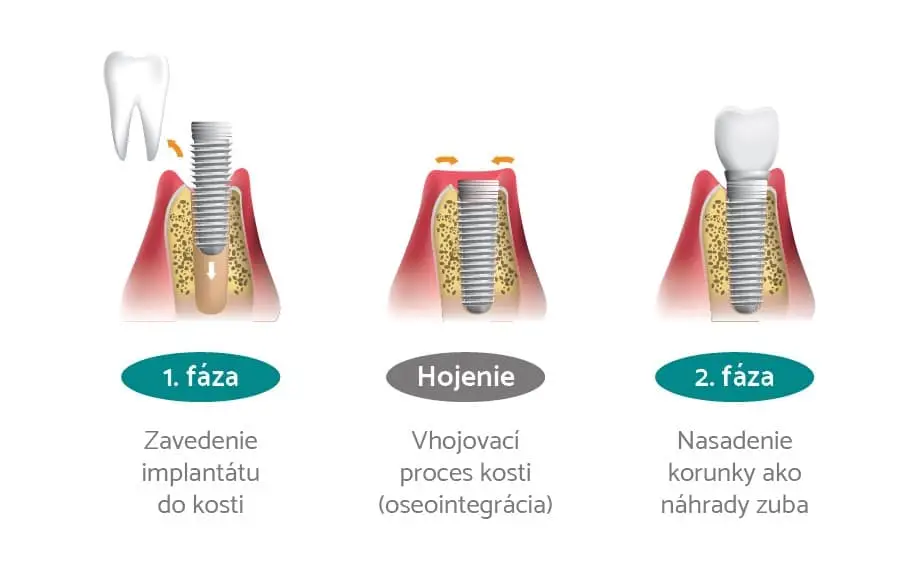
Phase 1: Implantation - Placement of the Implant into the Bone
The implant – an artificial root – is placed into the bone in the clinic using local anesthesia. The dentist creates a suitable site in the jawbone where the implant is inserted. During the healing phase, depending on the individual situation, a temporary restoration can be placed. This option allows you to enjoy a natural-looking smile again early in the treatment process.
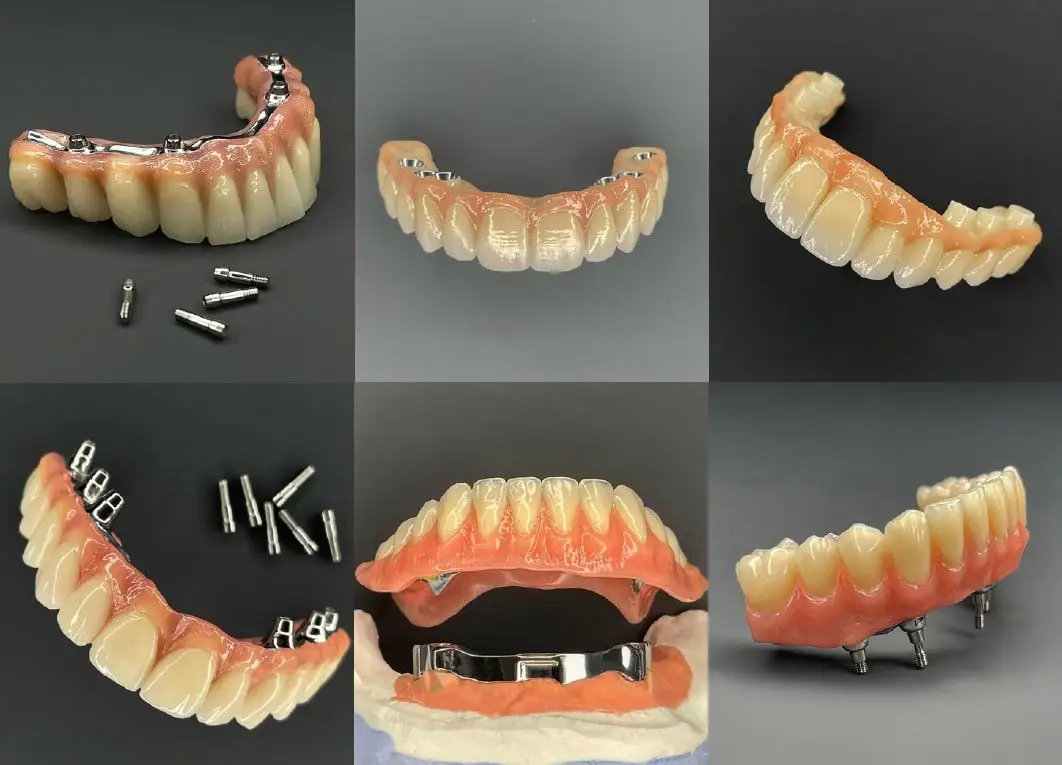
What does a PMMA temporary restoration mean?
A prosthetic restoration made from PMMA material serves as a prototype for the definitive dental restoration. Such a restoration can be adjusted in shape and size according to the patient's preferences and acts as a pre-form for the final crown or bridge.
Healing - The Implant Integrates with Your Bone
The healing period for the implant, during which it securely integrates with the bone, is individual and typically lasts from 2 to 3 months. Sutures can be removed 7-10 days after implant placement. Successful integration requires careful attention and excellent oral hygiene.
Phase 2: New Teeth Will Be Fabricated in the Laboratory
After successful implant integration, the next phase involves the fabrication of permanent fixed restorations. Our dentist, in collaboration with skilled dental technicians, works on creating your custom-made new teeth. We have our own dental laboratory and thus talented dental technicians.
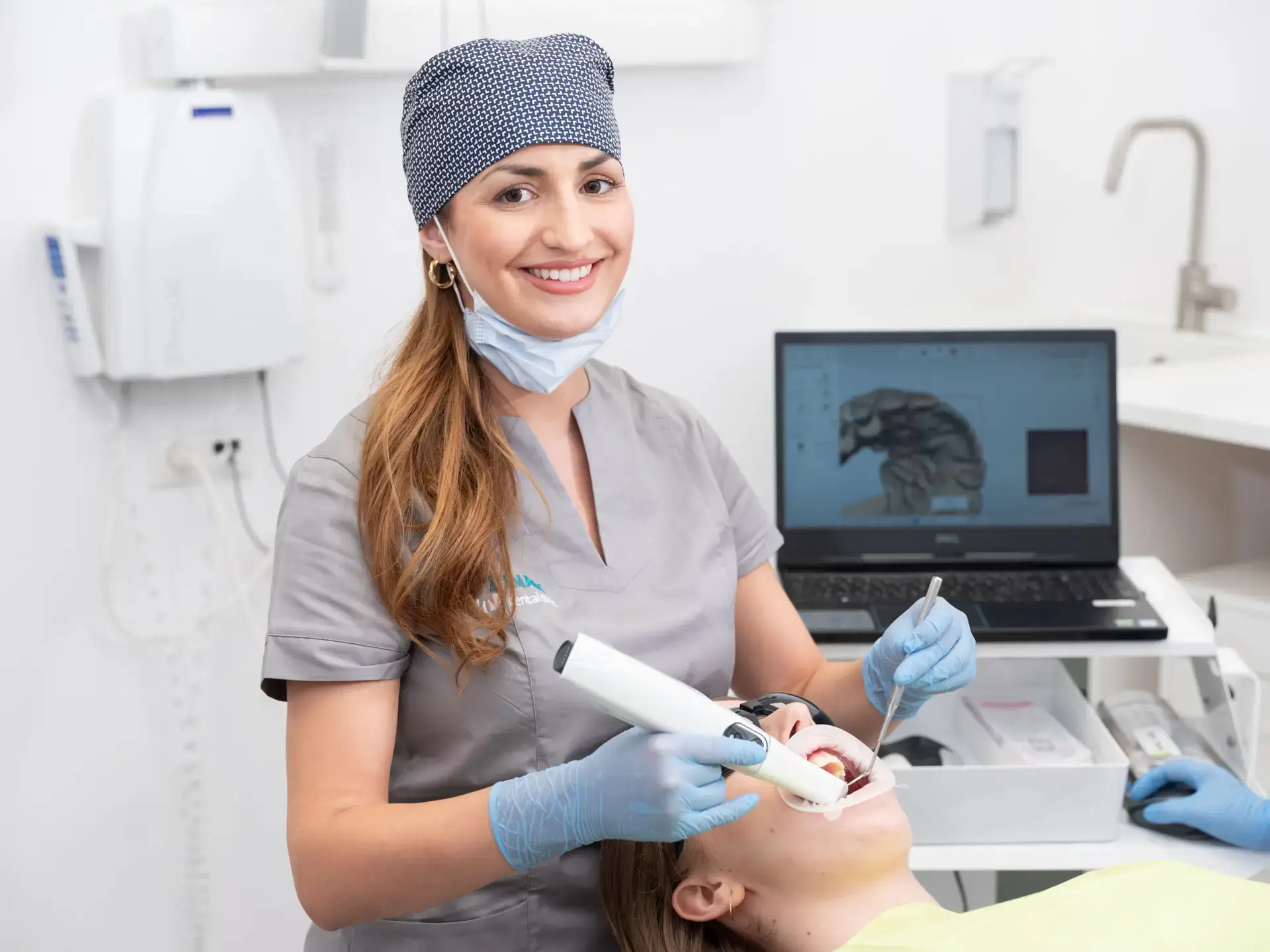
How Does It Work?
Thanks to modern CAD/CAM system technology, you don't need to undergo any impressions. The advantage is the use of a scanner that captures a 3D image of your mouth. Data from this scan is sent directly to the dental laboratory, where it is digitally processed by a dental technician and then sent to a machine that mills the dental crowns or bridges for the implants.
Placement of the Prosthetic Restoration
Once the restoration is fabricated, the crown portion is definitively delivered and screwed onto the dental implant, allowing you to smile, chew, and bite again just as before.
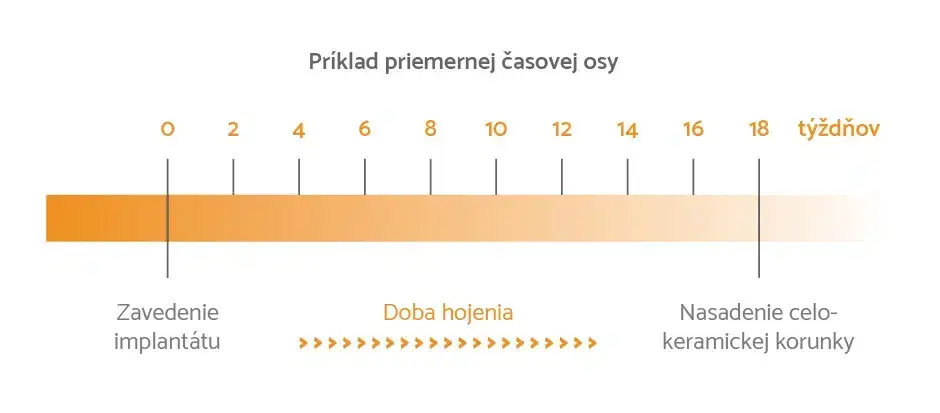
Implant Care
Just like a natural tooth, an implant requires care because it becomes a part of your body. Regular check-ups, professional dental hygiene, and diligent home oral hygiene can extend the functionality of your implant for decades. Regular dental hygiene at our clinic is a condition for the warranty.
Skilled Hygienists Ensure Implant Longevity
Maintaining healthy gums is essential for ensuring the long lifespan of an implant. Bacteria accumulate along the gum line around the implant. Therefore, it is necessary to clean this area thoroughly.
A combination of professional dental hygiene, performed by our dental hygienist at our clinic, and individual home hygiene is necessary. After implant placement, it is ideal to visit our dental hygienist, who will instruct you on how to care for your implant and prosthetic restoration at home and will individually determine the need for professional dental hygiene visits at the clinic.
Based on your case, choose what interests you further:
lives for the better
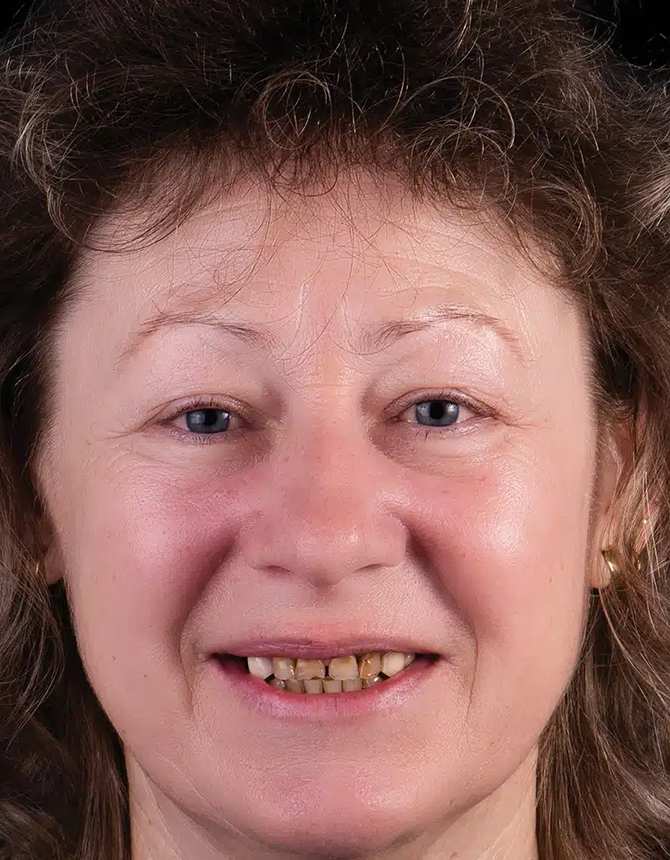






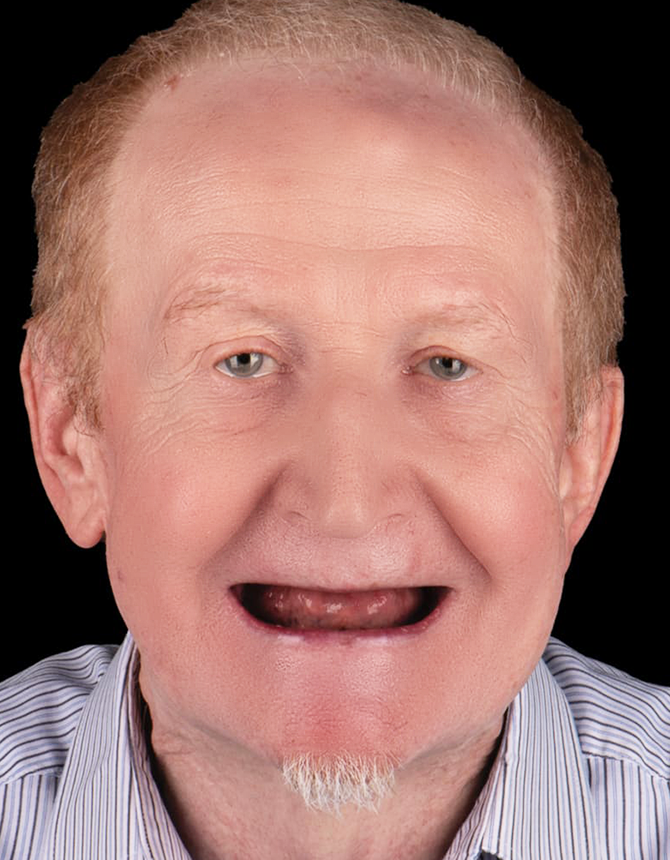

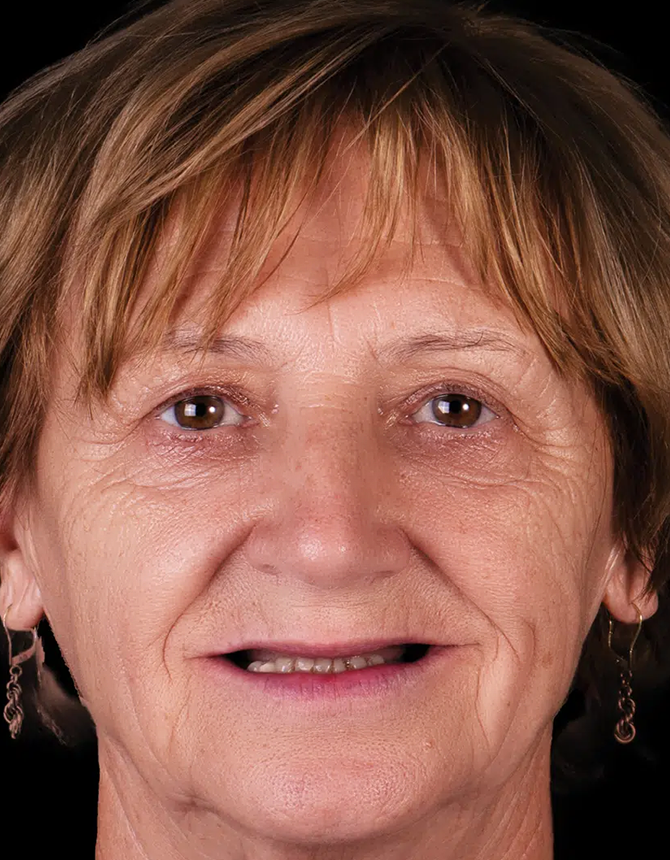
lives for the better