


Dental Hygiene
Do you think your dental care is perfect, yet you've never had professional dental hygiene? We can help you and show you how to further improve your oral care!
Professional dental hygiene is an indispensable part of comprehensive dental care at our clinic and is almost always the first step in your treatment plan. Incorrect and insufficient oral hygiene leads to the formation of dental caries, gingivitis, or periodontitis, and therefore it is not just a treatment procedure, but primarily a preventive measure against the onset of these mentioned diseases.
How is dental hygiene performed?
The basis of every treatment is our dental hygienist Zuzka familiarizing herself with your oral care habits. She will then thoroughly inform you about the condition of your mouth and proceed to explain the treatment process.
Removal of Deposits
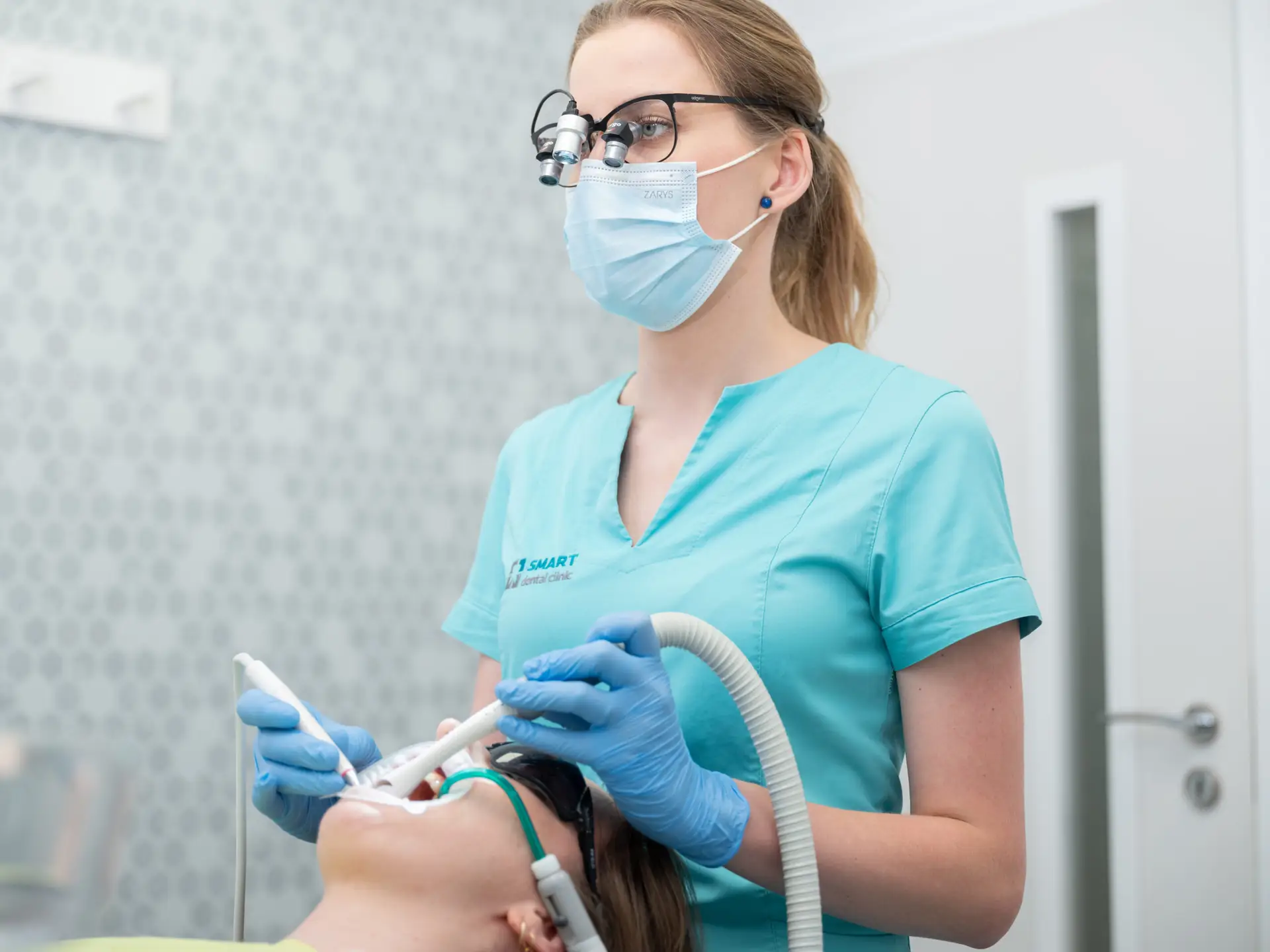
The actual removal of impurities from the tooth surface (most commonly tartar, plaque, and pigmentation from food, drinks, and cigarettes) is performed using various methods. It is carried out with ultrasound, which, thanks to its high frequency, disrupts the structure of tartar. Currently, this instrumental removal of tartar represents the fastest and most effective method in combination with mechanical cleaning. Mechanical cleaning usually follows ultrasonic treatment and involves cleaning residual tartar in hard-to-reach areas using scalers and curettes.
Tooth Sandblasting (Airflow)
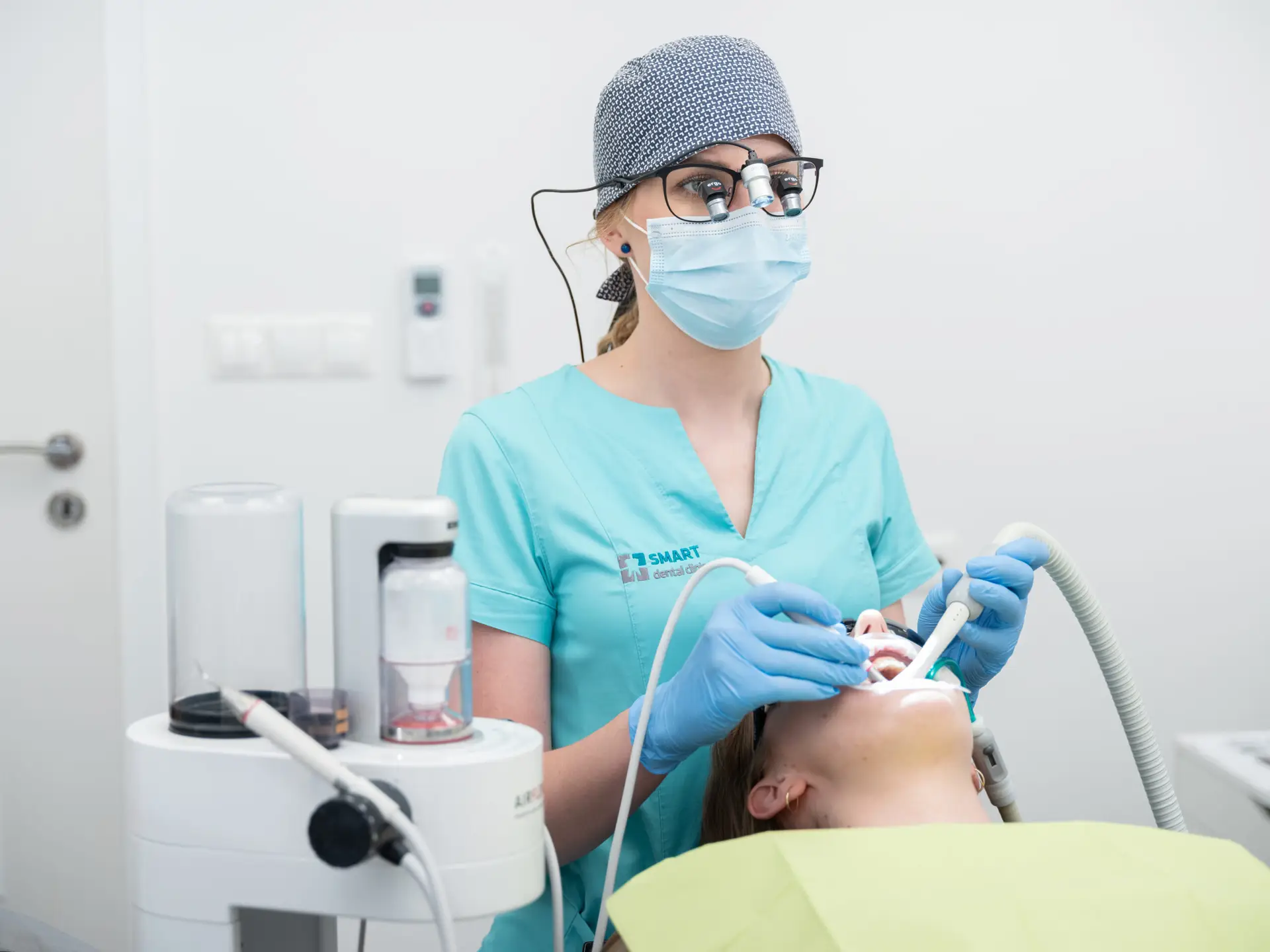
Subsequently, airflow or tooth sandblasting is performed using a mixture of sodium bicarbonate with water and air, which, under pressure, removes plaque and especially dark to black pigmentation from smokers, coffee drinkers, or tea drinkers. The advantage of sandblasting is that it removes plaque and pigments even from hard-to-reach areas, making it very suitable for orthodontic patients (with fixed orthodontic appliances). Often, sandblasting also results in teeth whitening by a few shades due to the removed pigments. After tooth sandblasting, the enamel is polished with a fine paste.
Dental Care
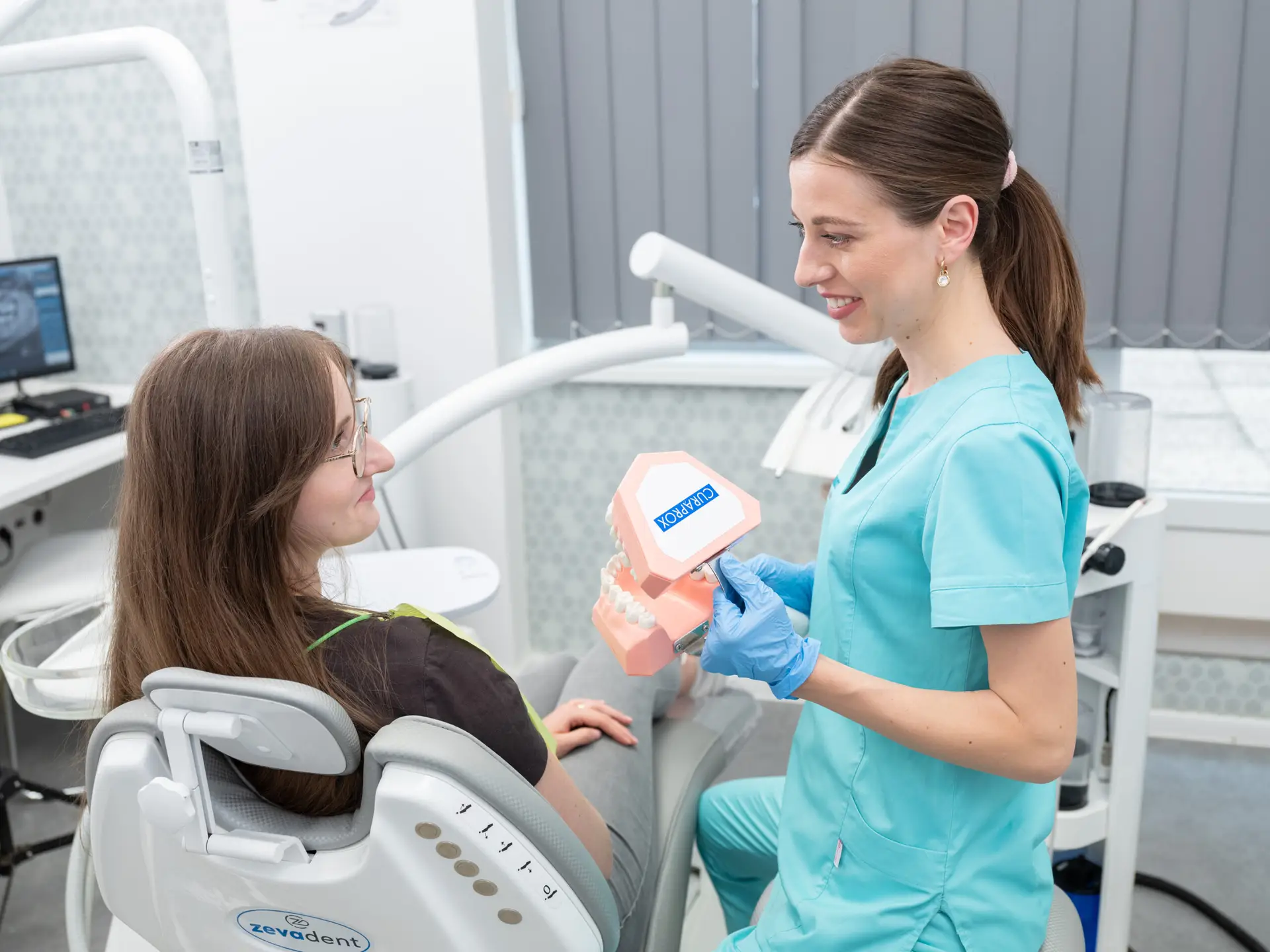
Our dental hygienists will also recommend suitable tools for your oral care and instruct you on the correct technique for their use. We often encounter situations where tools are used, but incorrectly, which ultimately renders them ineffective.
Fluoridation at the End
At the end of the treatment, teeth fluoridation is performed, or disinfectant rinses for patients suffering from gingivitis or periodontitis. Fluoridation provides effective prevention against tooth decay and creates a protective film on the tooth surface resistant to acids. Disinfectant solutions help reduce the number of harmful bacteria and positively influence the healing of inflammations.
the newsletter
By submitting this form, you consent to the processing of your email address and/or phone number for the purpose of sending commercial and non-commercial messages.
How often should you undergo dental hygiene?
We recommend that patients undergo dental hygiene every 6 months. However, if your teeth require it, and tartar formation is excessive, or if you are being treated for periodontal disease, we definitely recommend more frequent hygiene appointments. Our dental hygienist will advise you individually on when it would be appropriate to visit us again.
Is dental hygiene suitable for children and young people?
Of course. It is important to know that dental hygiene is not just about cleaning itself, but also about thorough instruction, and the sooner you master proper and thorough oral care, the sooner you will prevent the formation of tooth decay or the progression of existing decay.
You can find more information in the dental hygiene services section.

dental hygienist