

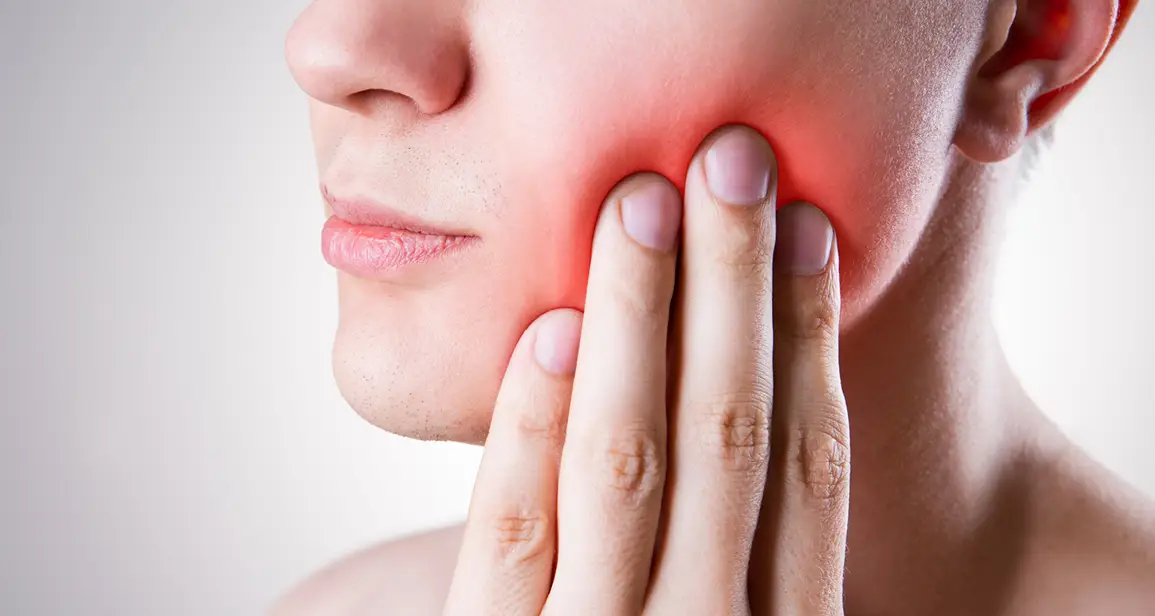
What is a wisdom tooth?
Wisdom teeth don’t make us any wiser. They’re called that because they usually come in during adulthood, between the ages of 18 and 30. However, this varies from person to person, and they may well come in even later.
Not only the timing of eruption, but also the shape, number of roots, course and number of root canals, position, and even the presence of third molars varies greatly from person to person. Some people may not have any third molars at all, while others may even have wisdom teeth (fourth molars).
Wisdom teeth currently serve little to no chewing function, as soft foods do not require the same mechanical processing in the oral cavity as they did in the distant past, when third molars were essential for chewing raw food. As a result, the size of the jawbones has decreased over the course of evolution, and third molars do not have enough space to erupt properly and fit into the dental arch. They thus become not only unnecessary but often the cause of unpleasant problems.
Professional service, quick and high-quality work, friendly staff, and a pleasant atmosphere. I’m extremely satisfied and highly recommend them. I had a surgical extraction of my wisdom tooth.
Lukáš B.

Wisdom teeth—why do they cause us trouble?
There are two main causes of cutting problems:
Wisdom tooth extraction
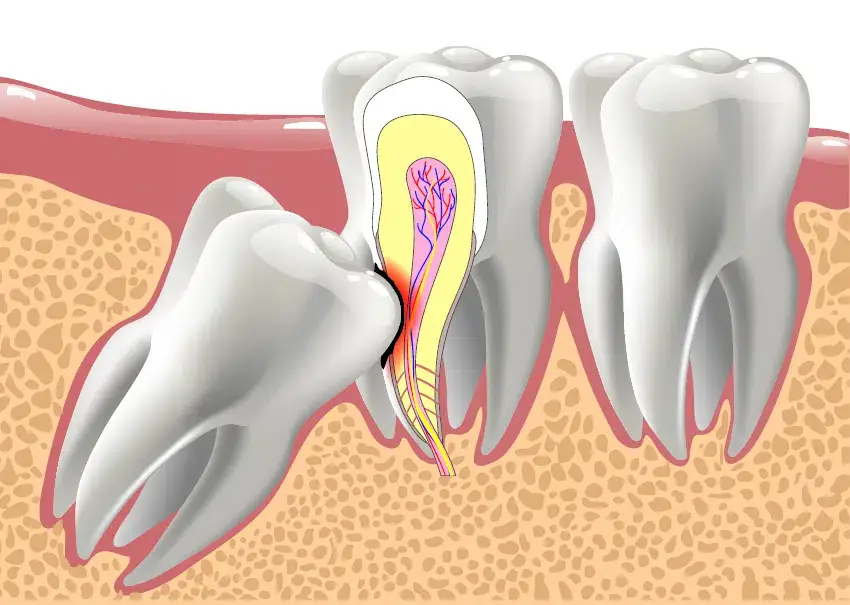
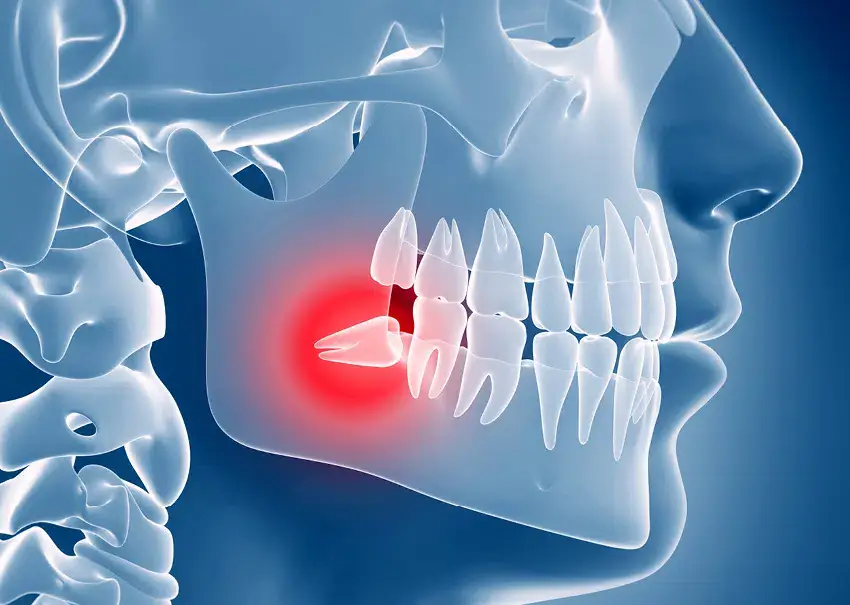
The first reason is that wisdom teeth begin to develop in a horizontal position and only gradually straighten over time. However, if this does not happen, the tooth remains impacted or erupts only partially. A horizontally oriented wisdom tooth can thus damage the tooth in front of it—the seventh tooth—by:
- either the formation of a site where bacterial plaque accumulates (in the case of a partially erupted wisdom tooth) and, consequently, the development of cavities in both the wisdom tooth and the adjacent tooth;
- or prolonged pressure during pruning causes the root of the seventh branch to die back.
Lack of space
Another common cause is that the wisdom tooth simply does not have enough space in the mouth to erupt. This may be due to the evolutionary changes mentioned above, or simply because a person may inherit larger teeth from one parent and smaller jawbones from the other.
the newsletter
By submitting this form, you consent to the processing of your email address and/or phone number for the purpose of sending commercial and non-commercial messages.
Wisdom teeth: What to do if they hurt?
Improperly positioned or partially erupted wisdom teeth very often cause unpleasant and severe jaw pain, accompanied by difficulty opening the mouth, chewing food, or swallowing. The pain may also radiate to the ear or cheek. In more severe cases, swollen lymph nodes, fever, and malaise may occur.
The cause of these problems is that when wisdom teeth erupt only partially, the gum tissue covers only part of the tooth crown. Bacteria and food debris can easily enter the exposed area, leading to inflammation (pericoronitis) and, consequently, painful jaw pain.
Although the symptoms may subside over time, they usually return after a while. Failure to treat this condition can lead to severe perioral inflammation, which in some cases can even be life-threatening.
Therefore, it is essential to visit a dentist to resolve the problem.
Dr. Tulenko literally saved me when I came in with an inflamed wisdom tooth. The extraction of my wisdom teeth by Dr. Tulenko was, paradoxically, the most pleasant dental visit I have ever experienced. There are not enough words to express my gratitude.
Gabriela B.
When to extract or not extract a wisdom tooth?
Wisdom teeth are indicated for extraction when they become a source of problems and pain, as we mentioned above. Another reason for removing third molars is to create space before orthodontic treatment (tooth movement with dental appliances).
It is important to note that if a wisdom tooth is healthy, properly erupted and aligned in the dental arch, and causes no complications, there is no need to extract it.
There are also cases when wisdom teeth can be beneficial:
A wisdom tooth can serve as a reserve
The first permanent teeth to erupt in children are the lower first molars. During this period, a child cannot yet perfectly clean their teeth on their own, and combined with the fact that lower first molars are present in the mouth the longest of all permanent teeth, they are therefore also the most frequently decayed and often extracted.
If a child loses a first molar at too early an age, a wisdom tooth can then serve as a reserve. The teeth will naturally shift, and in adulthood, the person will have a complete set of teeth without gaps. However, this only applies if the tooth is lost early. If a first molar is extracted from a twenty-year-old, the second and third molars will no longer shift.
A wisdom tooth as a natural implant
Another option used is autotransplantation. Upper wisdom teeth can be used as a natural implant. If a patient does not develop a tooth or loses one, we can insert the germ of another tooth into the space of the missing tooth. Upper wisdom teeth are very often used for this purpose.
Dr. Tulenko surgically removed my third problematic wisdom tooth, and I was extremely satisfied with each procedure; everything was quick and professional. I recommend him to everyone!
Jakub V.


surgeon-implantologist
In 2012, I graduated from the Faculty of Economics at TUKE in Košice, and concurrently, from 2010, I also began studying dentistry at the Faculty of Medicine, P. J. Šafárik University in Košice, which I completed in… Read more