

What is a dental prosthesis?
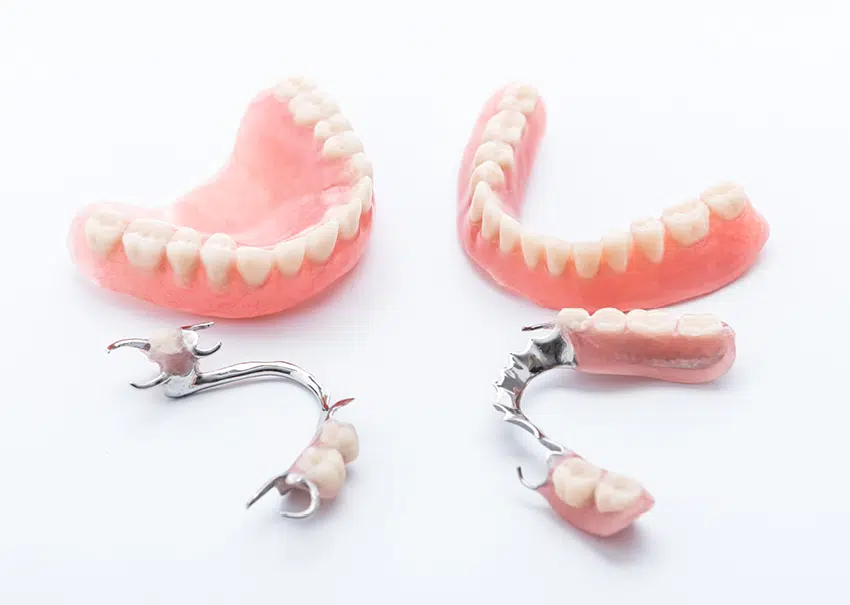
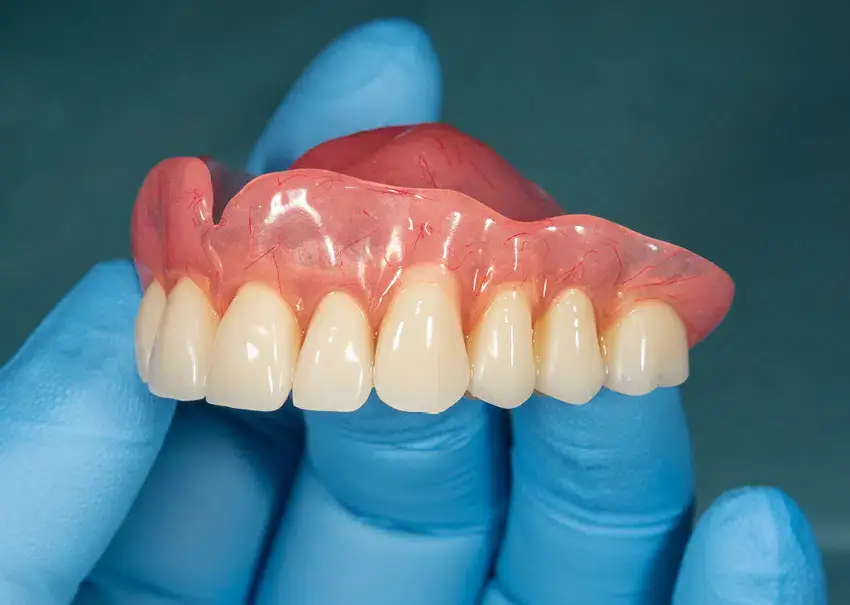
A prosthesis is a type of removable dental replacement that is not permanently fixed in the mouth, allowing the patient to remove it. These replacements are categorized into:
Partial removable dental prostheses
These can be fabricated if the patient has remaining teeth. These teeth should be healthy and stable to serve as abutments, providing support for the prosthesis and evenly distributing chewing pressure. Partial removable prostheses rely on abutment teeth using anchoring elements, known as clasps.
Complete dental prostheses
They replace teeth in an edentulous jaw. They are retained on the alveolar ridge due to suction, muscle activity, undercuts, and surface area.
Hybrid dental prostheses
They consist of a fixed and a removable part that fit together to form a single unit. Retention is provided by precision attachments, telescopic crowns, or implants (in this case, however, the prosthetic part supported by the implant is removable, not permanently fixed – in individual cases, i.e., with significant bone loss, this option may also be indicated).
Why is it important to replace missing teeth?
Replacing missing teeth has not only aesthetic but also functional justification (speech, chewing). When a tooth or a group of teeth is lost, the bone where the tooth was located recedes, and adjacent and opposing teeth "drift into the gap".
This results in a disharmony of intermaxillary relationships. This can lead to the premature loss of other teeth. The longer a tooth (or teeth) is absent, the more challenging its prosthetic replacement can become.
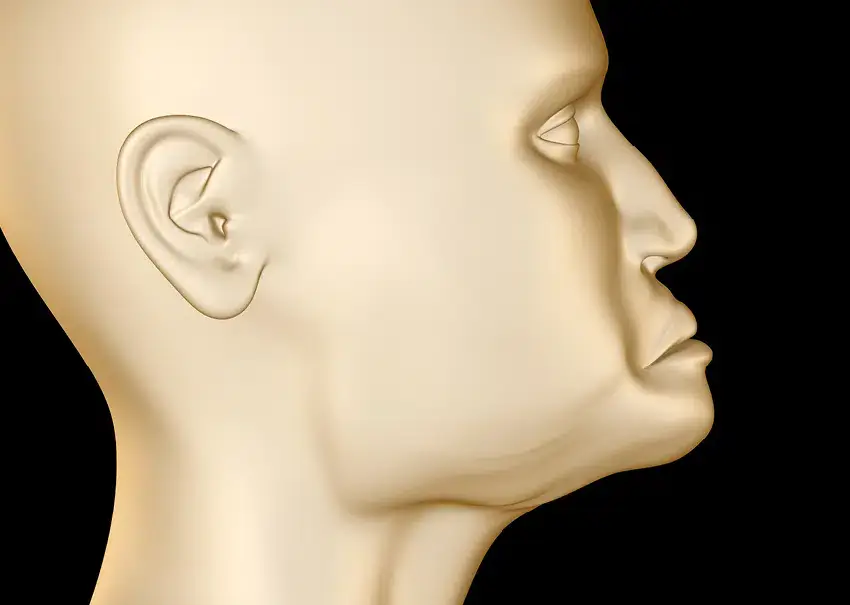
Furthermore, over time, the masticatory muscles atrophy, contributing to an older facial appearance (protrusion of the chin, unfilled nasolabial folds, deeper wrinkles).
the newsletter
By submitting this form, you consent to the processing of your email address and/or phone number for the purpose of sending commercial and non-commercial messages.
The process of fabricating a dental prosthesis
With removable prostheses, we strive to reconstruct the original anatomical conditions to the maximum extent possible. Every patient has individual oral conditions, which is why the creation of a prosthesis involves several steps and trials. Both a dental technician and a dentist participate in its creation.
The prosthesis can be made immediately – we insert the prosthesis right after extraction (however, it is necessary to add that after a few weeks, the prosthesis needs to be adjusted and later rebased – after tooth extraction, the bone heals and changes shape, which may cause this type of prosthesis to become ill-fitting over time) or delayed – 3 months after extraction – after the active bone remodeling is complete.
- Preparation:We assess bone height and thickness, abutment teeth, mucosa, sharp projections, etc. If conditions are unsuitable, we sometimes resort to surgical procedures (bone leveling or vestibuloplasty);
- Plan No. 1:We are preparing the upper and lower site plans;
- Impression No. 2:We are taking a functional impression;
- Bite height:We measure the height at which the new teeth will be positioned, thereby restoring the original bite relationship;
- Wax try-in:We verify the color of the teeth and the shape of the future denture;
- Delivery: The patient receives the new prosthesis, practices inserting it, and adjusts to the bite height. The patient will practice speech and the function of the prosthesis at home. Regular check-ups are then necessary – preventive ones if needed.
Denture Care
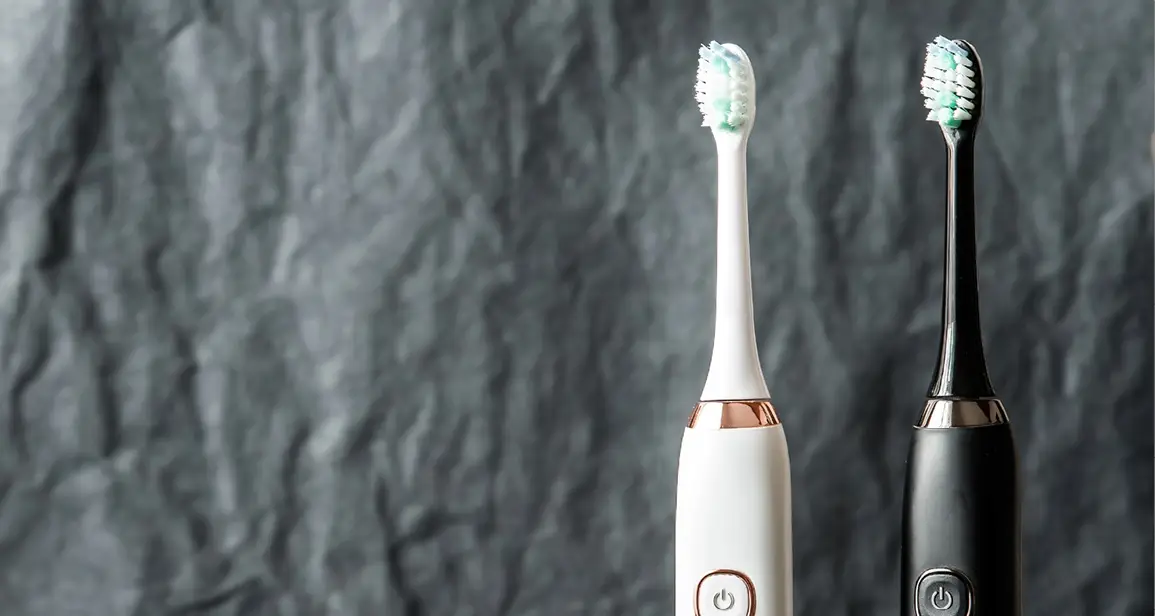
Even though a prosthesis replaces the patient's teeth, it is important to care for it properly. Mechanically clean the surface of the prosthesis with a toothbrush every day. Once a week, it can be immersed in water with effervescent tablets designed for this purpose.
The prosthesis should be removed at night. The reason for this is to avoid overloading the mucous membrane and abutment teeth; continuous wearing of a removable prosthesis can lead to candidiasis or mucosal hypertrophy in the mouth.
The patient should also undergo regular check-ups of the prosthesis/remaining teeth.
Dentist
In 2012, I graduated from the Faculty of Economics at TUKE in Košice, and concurrently, from 2010, I also began studying dentistry at the Faculty of Medicine, P. J. Šafárik University in Košice, which I completed in… Read more