

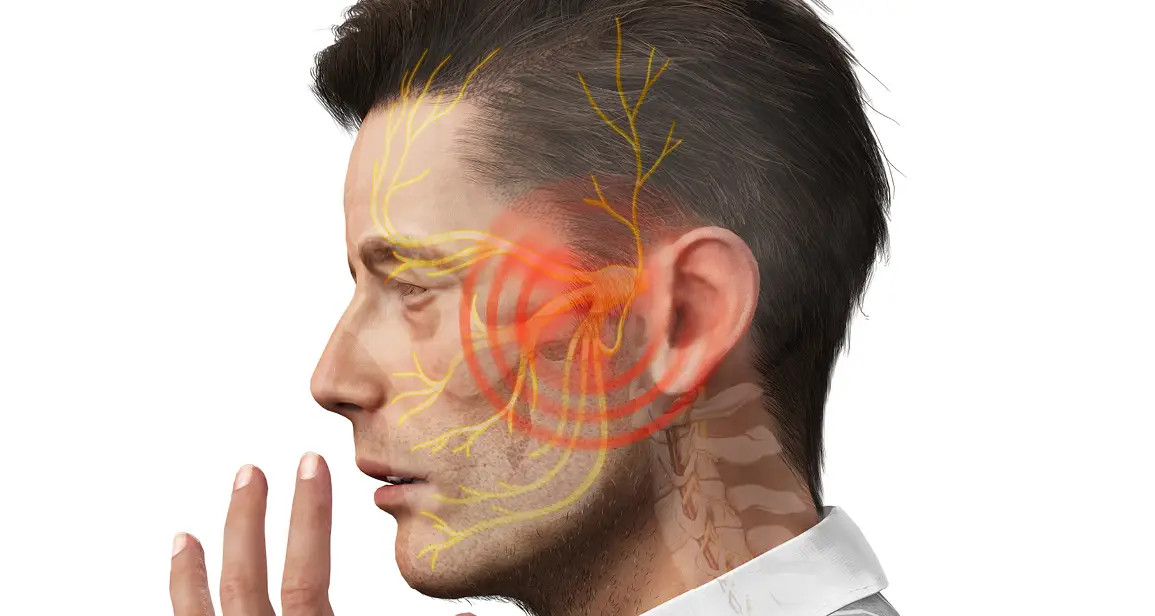
What is the trigeminal nerve?
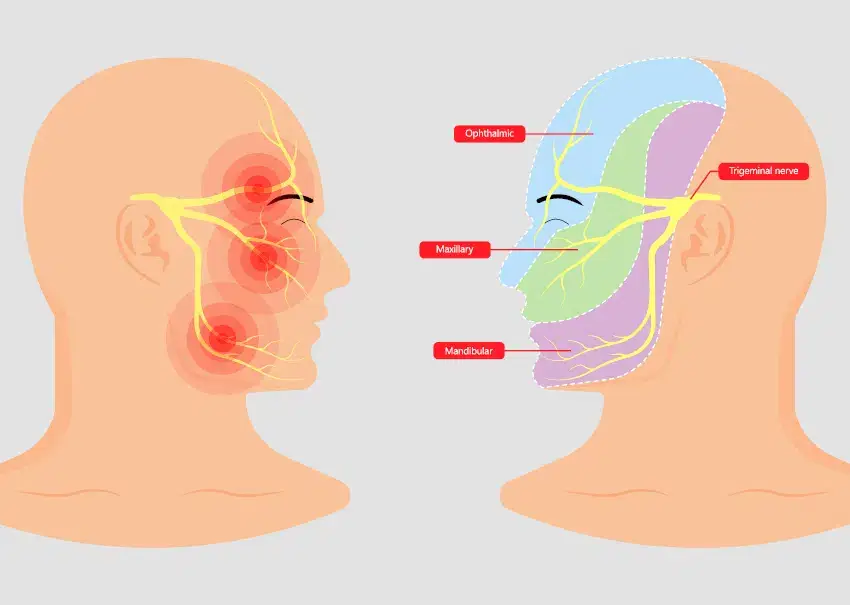
The trigeminal nerve (nervus trigeminus) is the fifth cranial nerve that innervates several facial structures in the areas of the orbit, upper jaw, and mandible.
As its name suggests, it has three branches. The innervation is sensory (feeling touch, cold, pain, etc.) and motor (movement of some masticatory muscles). Similarly, teeth in the upper jaw are connected to the 2nd branch of the trigeminal nerve, and teeth in the mandible to the 3rd branch.
How does trigeminal nerve inflammation manifest?
Pain caused by inflammation of this nerve is described as one of the worst pains. Other conditions in this category include childbirth, pulpitis (inflammation of the dental pulp), and renal colic.
This pain is described as short but intense, sharp, stabbing, burning, similar to an electric shock. It radiates into the ear, temple, temporomandibular joint, palate, teeth, or paranasal sinus. It typically recurs several times a day or even over a year.
The pain is usually unilateral in most cases, most often affecting the 2nd and 3rd branches of the nerve. It most commonly affects women over 40 years of age. It can appear unexpectedly, but certain irritating stimuli can also trigger it. Patients with this condition are afraid to go outside, shave their face, eat, speak, or brush their teeth, fearing the onset of pain.
the newsletter
By submitting this form, you consent to the processing of your email address and/or phone number for the purpose of sending commercial and non-commercial messages.
What are the causes of inflammation?
The exact cause is unknown. Risk factors include a history of herpes zoster (shingles), multiple sclerosis which damages nerve sheaths, diabetes and high blood pressure which cause changes in blood vessel walls that can press on the nerve, and tumors and cysts which can also compress and irritate the trigeminal nerve.
Trigeminal nerve pain can mimic toothache, and patients often seek a dentist's office. In cases of ear pain and sinus pain, they visit an ENT specialist.

How to diagnose and treat inflammation?
Conversely, the diagnosis of trigeminal inflammation can mimic other diseases, making it challenging to determine. Several examinations are performed – anamnesis (medical history), magnetic resonance imaging (MRI), and 3D X-ray CT. A neurologist or neurosurgeon will establish the definitive diagnosis and subsequent treatment.
Depending on the severity, treatment may involve prescribed medications taken by the patient, trigeminal nerve blocks, or surgery, with varying degrees of invasiveness. The primary goal is always to relieve the pain experienced by such patients.
In such cases, the dentist's role is to examine the patient, rule out a dental cause, and, if trigeminal nerve inflammation is suspected, refer the patient to a specialized facility.

Dentist
I completed my dental medicine studies in 2020 at the Faculty of Medicine, Comenius University in Bratislava. During my studies, I completed several internships at modern clinics in Slovakia and participated in… Read more